The Man Outside of Starbucks in Kansas City, MO

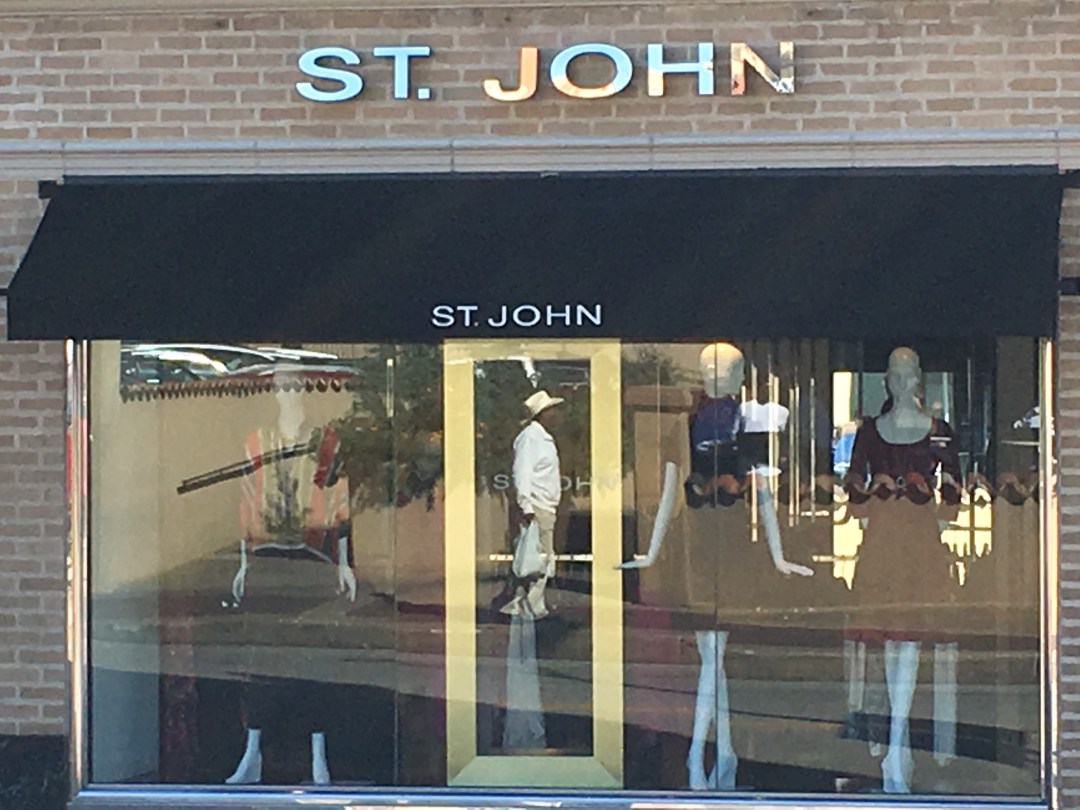
A man was walking back and forth outside of Starbucks in Kansas City, MO, for the whole hour I sat there, watching. He carried two plastic bags, spoke to no one, and no one spoke to him. It was morning, and the St. John store across the street was closed. He only walked as far as the does in the video. Most of the time, he stood by the potted plant, next to the ramp that leads to the Starbucks patio, where people came and went.

My conscious now berates me for not having said hello, but I was playing a role.  It was as if I were invisible, making myself known through other people, people who felt invisible, too. I was a documenter. And if given the chance, yes, I would have documented his life. But I hadn’t the time or resources to talk with, meet, and follow him. All I had was his reflection in a high-end retail store on a Monday morning.

Wells Fargo Won’t Say “Sorry”

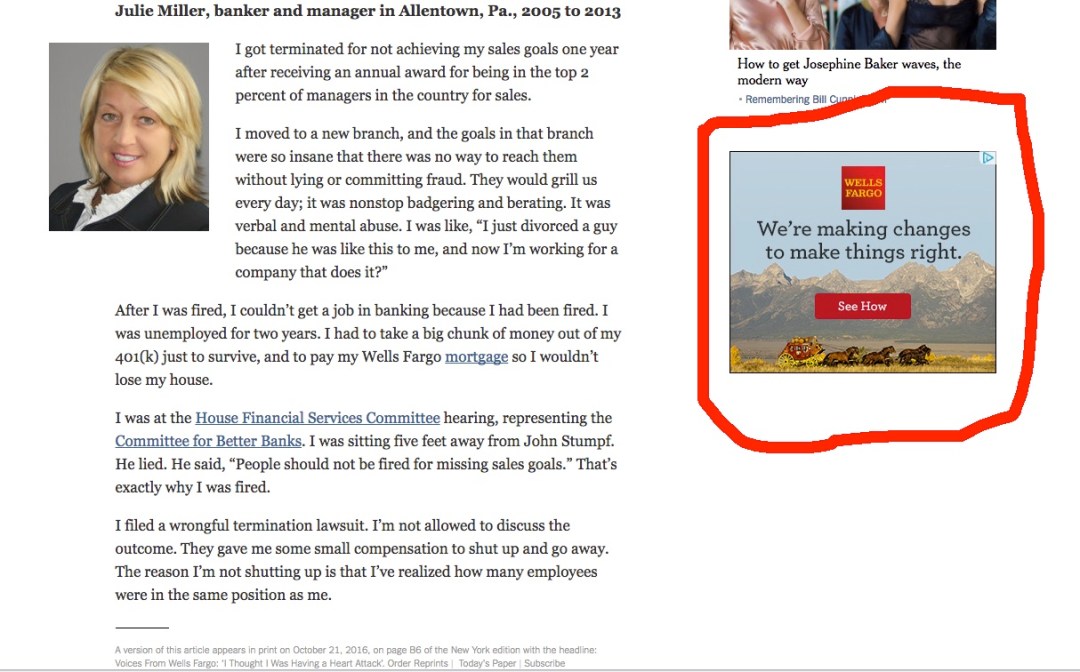
Wells Fargo has been under fire for unauthorized banking accounts that were opened in its customers’ names as a result pressuring its employees to make sales.  First-hand accounts from its employees were published in the New York Times October 20. Alongside the article is an advertisement for Wells Fargo (see right)…


wellsfargoadvertalongsideaccounts
NYTimes.com

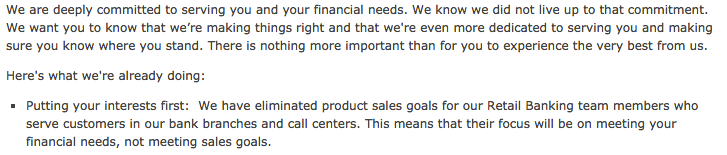
…which links to a Letter of Commitment to its customers:

screen-shot-2016-10-21-at-10-27-46-am
Wellsfargo.com

And just like that, no more sales goals for Retail Banking team.  No where in the NYT article does the term “retail bank” or “retail banking” appear.  Which makes me wonder, will WF just change their phraseology?  They have to come up with an alternative way to generate profit, and if it’s through the services they provide (likely) via banking, they’ll have to rethink their strategy.  Note, this is not a letter of apology, therefore it is not an admission of guilt. All other proof and facts external of WF can say what they might, but the guilt cannot come from the party itself.  Banking, like Journalism, is a business, and it’s not news that big business and ethics rarely mix.  When a company is “too big to fail,” it’s because it has invested, invests, or partners with other companies, seeking opportunity to grow. In doing so, it compromises its or its partners’ moral or ethical values. So what does it mean, in this country, to “grow”?  If we had to pit the verb against a similar verb, like “evolve”, the difference may be clear.  “Grow” may simply mean to expand or inflate as with air, or fat, an excess of which has potential to harm; whereas “evolve” can imply an internal motivation and intuitive movement toward betterment of self and humanity, learning from the past and changing it, not just masking it in rhetoric and strategy that has the same initial purpose–to grow in size, full of air.

A corporation is not a person, therefore it cannot say sorry.

Can we grow and evolve at the same time?  That’s what we want to do.

Where Can I Watch “HyperNormalisation”?

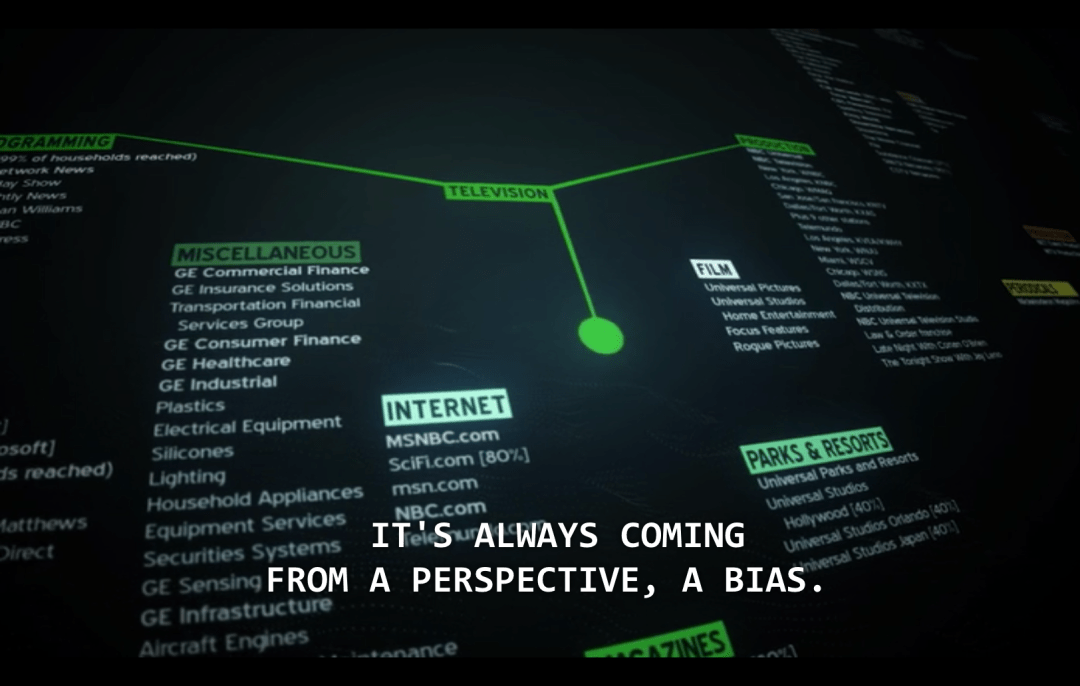
In the documentary “Barbershop Punk” (available on Netflix), Ian Mackaye, a punk musician best known from bands Minor Threat and Fugazi, says that “television news, movies, tv shows” are “all coming from a perspective, a bias.”  The gist of the doc is that corporations and service providers are controlling what the public can share, see and read on the internet–and that’s not okay.

Media can overlook, exploit, or undermine facts. The majority of media is derived from one  conglomerate bias, one perspective.  The facts become a fiction, a fabrication of the inarguable, concrete evidence of what is happening off screen, on the street. For example, we can read about carnage in the middle east, but it won’t be on TV.  The American media has filters. Filters not only dictate what we see but shape what we want to see. The medium–TV shows, news stations, movies–is the biased message.

Hypernormalism is a term that refers to the radical acceptance of fabrication due to the limited availability of any truth or reality outside of it.  The public, in a sense, makes its own narrative based on the skewed information provided by “the powerful,” or those parties who monopolize the market and make executive decisions based on what best serves them.

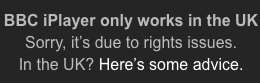
HyperNormalisation is documentary by Adam Curtis and is supposedly available to watch on Youtube, but it won’t play.  Another site says the full documentary is available to watch here, although as of this moment [edit: it’s been 1 hr], it’s taking forever to load–a sign, “Barbershop Punk” might suggest, that the content is being blocked.  Ironically, the places it was available, YouTube and BBC, no longer show it due to BBC copyright.

screen-shot-2016-10-20-at-12-30-39-pm
from Youtube
screen-shot-2016-10-20-at-12-30-53-pm
From BBC.co.uk
screen-shot-2016-10-20-at-12-31-49-pm
from BBC.co.uk

“We can’t always acquire right for every program…sometimes due to cost involved in acquiring licenses from third parties, or maybe for other legal or contractual reasons.”

We the public do not know what those other legal or contractual reasons are. After over an hour of loading and re-loading, I still cannot watch Hypernormalisation. Lucky for me, the trailer, and docs like Barbershop Punk, are just enough to keep me suspicious.

{edit: it’s now available to watch on Youtube.  Cheers!}


We Care, and It’s Bewildering

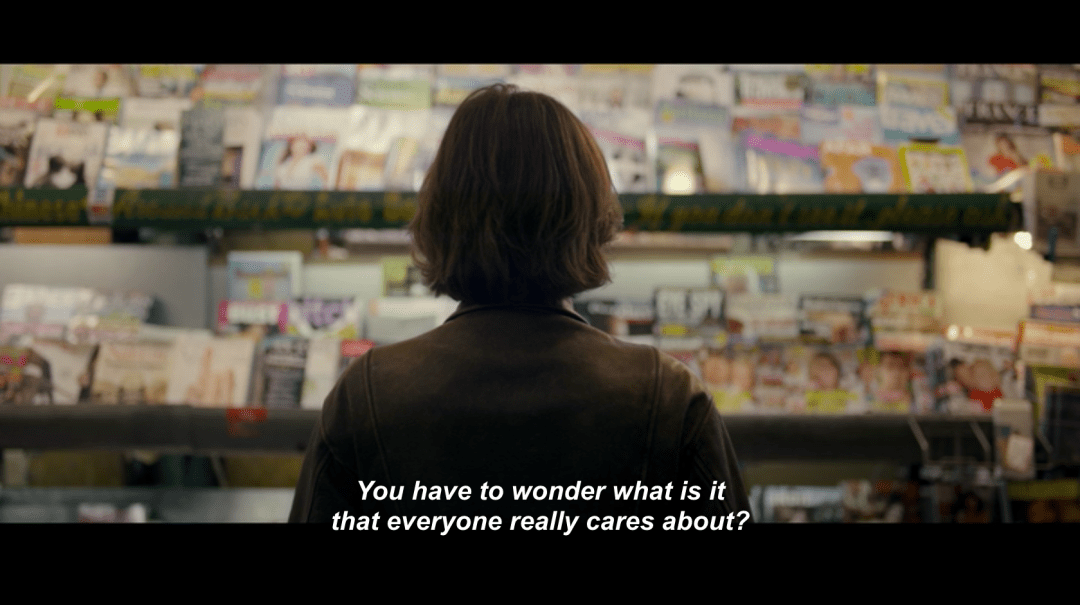
The featured image is a screen shot from the Netflix documentary “Amanda Knox.” The subtitle is her speaking, and that is the back of her head.  Her rhetorical question comes in the last 10 minutes of the film.

Before she was finally exonerated in 2015, Amanda spent almost 4 years in jail for being convicted of murder.  The documentary shows that her supposed culpability wasn’t scrutinized nearly as much as the sexy details of stories that marked the covers of countless newspapers and periodicals.  Her blameworthiness was an illusion marked by fear: “It’s people projecting their fears,” she says offscreen.  “They want the reassurance they know who the bad people are and it’s not them.” She’s sitting again in front of the camera, looking down to one side. “So maybe that’s what it is.  We’re all afraid.  And fear makes people crazy.” She looks up to the camera and offers a smile that’s like a shrug.

In a New York Times article about the impact the content of the debates, rallies, and subsequent memes from this election has on one 7th grade social studies teacher and his class in Wisconsin, the author, Julie Bosman, highlights the teacher’s struggle to teach this 2016 campaign: “Mr. Wathke has spent down time on evenings and weekends worrying about the effect of the campaign on his seventh graders….His students said they have also wondered what they were allowed to say about the campaign in class.” The students end up “sticking to the issues” during their mock debate, avoiding the kind of language and phraseology that could, as one student puts it, send someone to the principal’s office, or worse, get one expelled.

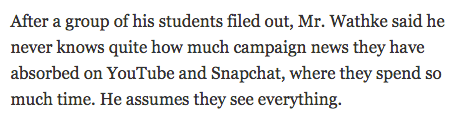
School is a controlled environment, and as we read the article we get the sense that Mr. Wathke is doing a good job maintaining it, despite the ever-looming threat of social media. Bosman knows this, and says:
screen-shot-2016-10-18-at-12-30-12-pm

We don’t know, either, how much kids absorb on social media.  It may not be as much as we fear, but the content itself is not the main issue.  If it were, that’s like assuming a child will never hear the word “fuck” so long as mommy and daddy never use it in the house.  The word “fuck” is not a problem.  The rampant use of it as entertainment could be.  Bosman closes:

screen-shot-2016-10-18-at-12-30-16-pm

If the medium is the message, then it’s not the content that threatens these neutral yet impressionable minds, but the insipid pervasiveness of the content, i.e. social media, that generates popular vote.  In “Amanda Knox,” when Amanda is looking at all the magazine covers that sensationalize or exploit, she is looking at the vote.  When a child scrolls through an endless feed of memes, that is a vote.  Perhaps it’s not the content so much as the availability and accessibility of it that worries Mr. Wathke and boggles Amanda Knox. Although, they are both humanitarian. Amanda, according to the documentary, advocates for the wrongly convicted.  And Mr. Wathke, as a teacher, is perhaps the second most influential person to a child, next to a loving parent.

We are responsible for how much we partake in the medium, whether it be television, newspaper or magazine; how much we choose to engage; and whether or not we will populate our minds with the popular opinion, whatever it may be that day, or minute.