The Choices We Have

“By careful handling of the smoke in the fire, fire can be made to blaze.  Therefore the human form of life is a chance for the living entity to escape the entanglement of material existence.”

-A.C. Bhaktivedanta Swami Prabhupada

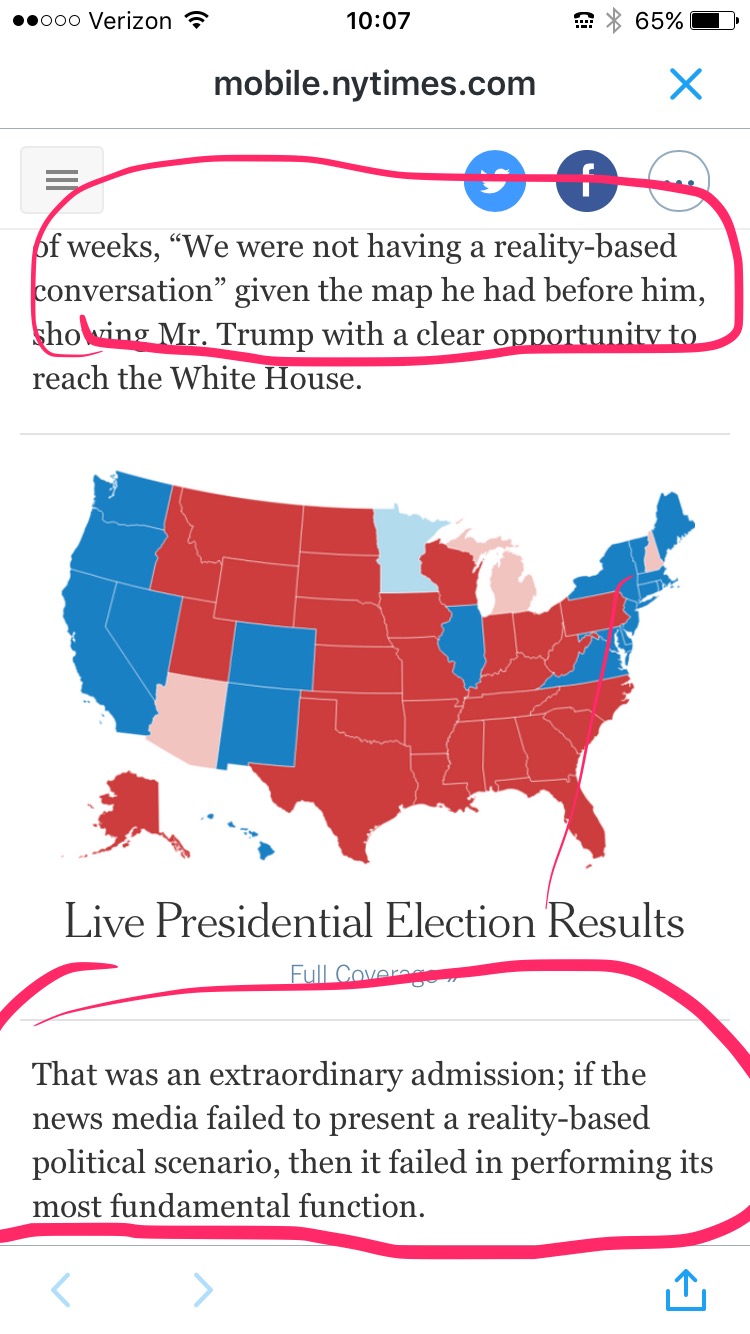
How do we escape the entanglement of material existence? Watch the news or scroll through your newsfeed, the content carries you away. You can believe what you see,

img_5028

Does the mere suggestion make you want to buy/consume/sell?

but you don’t have to. You can control the input. Your involvement is what you make it. Make it internal, moving from the inside–>out. Moving from the outside–>in will cause you to consume what you’ll probably soon want to expel. Anger breeds anger, fear breeds fear. You’ll find that you may not need most of the things you choose to consume. You may not need to read the news like it’s air. You may need to pull away from the mass dialogue. You may just need to breathe on your own for a while.

Where Do We Go Now?

What would it be like to not follow the media?  What would it be like to step back from the madness it has packaged as “story”? “Consumption is the medium that can poison or palliate the human narrative,” writes Denis A. Conroy. “Propaganda can be as powerful as the narcotics that assuage the pain of alienation, so prevalent now among people devoid of meaningful voice or purpose.” We have no choice but to create our own meaning, our own purpose. Its message must be separate from all others. We cannot fall under the spell of delusion. Disinformation has been disseminated by media outlets to fulfill an ulterior motive. We cannot be as upset when we see that this was their purpose, because whether it was fulfilled or not, we still have our true nature.  We still have our peace of mind. Disengage, dis-identify, with the media machine. Ignite change from the ground up. The media built us up and broke us down. It showed us what we’re made of, and what we can build now without it.


fullsizerender-2

All we know is what we’re made of.


We Live in a Virtual Reality

Virtual Reality is now a reality. The most exciting experiences of it come from headsets and equipment that can cost thousands of dollars, while more affordable, albeit less immersive, experiences can happen through technology like Google’s Cardboard.

Let’s build on the sweet notion that you don’t have to spend a lot of money to have a great experience.  Go to the woods, take a hike, smell the air.  Simple.  But what about when you’re bombarded with sensory stimulation, like pictures, or perfume, or the latest trendy pop song?  If the pictures are bad, the perfume stinky, the pop song not fun to dance to, are you going to be affected?  No; you’re going to turn around and walk away.

Similarly, when you are bombarded with pleasant smells, attractive photos, and hypnotic beats, are you going to walk away?  No; you are going to get closer.  You are going to want more.

If you’re not loving the experience the product provides, the intellectual stimuli it touts, you’re not going to believe it–you’re going to fall out of love with the candidate, celebrity, brand, and jump to something else.

Virtual reality works the same way.  The more expensive the equipment, the better the gear, the more “real” the reality, the better chance of losing yourself in it.  If the experience isn’t that great, feels cheap, then you’re going to fall out.

screen-shot-2016-11-07-at-11-12-59-am

Propaganda works the same way as virtual reality. If you’re not loving the sensory experience it provides, the intellectual stimuli it touts, you’re not going to believe it–you’re going to fall out of love with the candidate, celebrity, brand, and jump to something else.

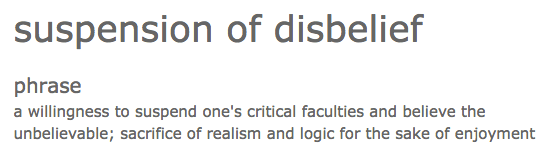
“Unlike most forms of media,” says this article on Shopify’s blog, “virtual reality blocks out the rest of the world in a way that doesn’t just encourage us to suspend our disbelief, but actually takes our senses for a ride and immerses us wholly in the experience.”

Like a headset, propaganda takes our senses for  ride and immerses us wholly in the experience. The best kind of propaganda, the most effective, takes hostage our objective thinking and captures us in its creation.  We have to suspend our belief that corporate politics do not manipulate us if we want to consciously vote. We need to enjoy the story of this election in order to believe in it, and thanks to social and corporate media, it’s affordable and easy to do.

Humanity in the Job Search

by Angela Robinson

Anything worth having requires effort. Careers fall into this category. Getting work is work, and getting a job requires more than effort. It requires fluency in the language of the job search. It requires connections, and the luck or presence of mind or grace it takes to make them. It requires time and resources and persistence.

It also, unfortunately, means enduring a lot of irreverent treatment.

Resumes and cover letters submitted online may not ever even be seen by human eyes.   We are told to craft the perfect resume, the perfect cover letter. We distill ourselves down to our most attractive parts, we suck out the marrow of what makes us wanted, we create paper versions of ourselves and snip, snip, snip.

Then, a computer program scans the documents, and if we don’t use the exact right words or use a file type it can’t read at all, into the trash bin it goes. Out goes the rejection.

We distill ourselves down to our most attractive parts, we suck out the marrow of what makes us wanted, we create paper versions of ourselves and snip, snip, snip.

Sure, you can try to guest the correct keywords, but that would mean tailoring your materials to fit each particular job. Writing a “perfect” resume is not only dependent on selecting and expressing worthy credentials, but gaming the software to let your document pass.img_3698

Some professionals advise that it’s better not to apply online at all, or at least, not to apply online only. Others happily cast their stones and declare it a “lazy” method.

“Lazy” feels like an especially ironic word to be used by people who let computers sort applications and potentially lose qualified applicants.

It can be argued that current applicants aren’t lazy as they are uninformed, as evidenced by the hundreds of articles with titles like “Things you don’t know about job search,” or “Mistakes you don’t know you’re making.” Self-education isn’t always easy; there’s a lot of conflicting career advice out there.

It starts to feel like the cover of a women’s magazine in a checkout line. You’re not good enough. What you’re doing wrong. How to attract your dream man/job and make him/it stay.

“Network” is a common antidote offered to the weary job seeker. (This survey claims as many as 85% of jobs are gotten through networking.) It’s good advice, but it’s not an immediate solution.

Networking takes time and often takes money (event-related costs, premium services on sites like LinkedIn.) It gives an advantage to people with more resources and social graces. There are more networking opportunities for people already in the workforce, paralleling the whole conundrum of entry level jobs asking for experience. Yet for the already employed, there exists the chance that networking could damage relationships with current employers.

The list of demands goes on. Read the employer’s mind. Know exactly how they’d like to be courted. Promise to solve all of their problems. Connect with someone at the company, but don’t inconvenience them. Hunt for contact info. Have a clean social media presence–having no social media presence may seem suspicious.

The list of actions required to secure a job keeps growing. It starts to feel like the cover of a women’s magazine in a checkout line. You’re not good enough. What you’re doing wrong. How to attract your dream man/job and make him/it stay.

But what’s truly unbearable is the lack of respect on the end of employers. Too often employers put rigorous stipulations on job seekers, only to deliver bad interviewing and hiring practices in return.

Applicants are responsible for the maximum amount of effort and professionalism; hirers, the minimum.

In a survey of 95,000 job candidates, 60% reported receiving impersonal job rejections, while 56% reported receiving no response at all. This means that over half of job applicants are rewarded for their efforts with inadequate feedback. Frequently, the job-seekers’ methods are cited as the cause of a lackluster response, but it seems unlikely that over HALF of all applicants are applying the “wrong” way. Even if they are, it would mean that half of the population is ignorant of recruitment standards, and would call for clearer communication of expectations.

There’s plenty more to dissatisfy jobseekers.   The interview process is long and grueling (22.9 days, average), and employers often fail to communicate an accurate timeline of the interview/hiring process (or don’t stick one they’ve outlined.)

Sometimes, companies interview candidates even though they’ve already filled a position. They do this so that they seem like they’re considering multiple candidates, or to booster support for a candidate they’ve already chosen.

Job seekers are held to high (even perfectionistic) standards by companies who only claim to embody those same standards. The great inconsistency that exists between expected applicant and employer behavior is unjust.

Here lies the core of the problem.

Applicants are responsible for the maximum amount of effort and professionalism; hirers, the minimum.

Job seekers are expected to “prove” themselves worthy, while employers are not expected to do the same.

The discouraging part is not the effort that it takes to try to attain the job, but the lack of acknowledgment and respect for that effort.  This makes for a lot of frustration in the system, both from job seekers and professionals. Job seekers can quickly become discouraged.

The discouraging part is not the effort that it takes to try to attain the job, but the lack of acknowledgment and respect for that effort.

There are ways to turn down an applicant more humanely, more professionally. A company can extend the same amount of regard to their candidates as the candidates have shown to them, with very little additional expenditure of time or money. There are ways to adjust the interview process to reduce tension between applicants and employers.

Yet that behavior is not compulsory, so companies are able to behave however they deem fit. Beyond sweeping critiques and reviews on sites like Glassdoor, there’s not much accountability for companies to treat candidates with decorum. Applicants accept the indignities of the job search without much opportunity for rebellion.

It’s demotivating. Who wants to work for someone who asks for more than they give back? (It hurts the business as well. Bad hiring practices turn candidates off of companies, and may translate into dissatisfaction on the job. They win no votes for employee loyalty, and replacing employees is costly.)

Unfortunately, many workers feel as if they don’t have a choice.  Hopefully, that changes soon. The hiring process could use some reform. People call the job search a necessary evil. It may be necessary, but it doesn’t have to be evil.★

 

angelarobinsonphotoAngela Robinson has an MFA from Sarah Lawrence College. She currently lives in Central NY.

 

A “Because I Can” Convenience?

When Gardasil, the HPV vaccine, was announced to the public in 2006, it felt too fast, too soon. Friends who got the vaccine wondered why anyone wouldn’t. It seemed great, the new precautionary trend, but we were being fed what we wanted to believe: that we were protecting ourselves from a virus we didn’t know enough about.  Our ability to swallow beliefs allows companies to create markets out of thin air.

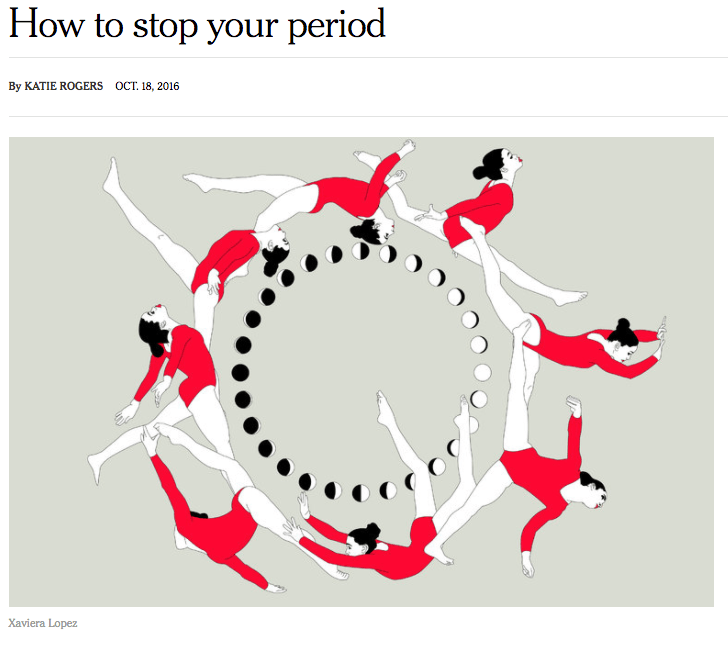
On October 2016, The NYT ran an article called “How to stop your period.” Maybe, I thought, there’s a healthy way to do it that’s not starving or over-exercising. “Healthy”, to me, means living as close as possible to nature with the smallest possible amount of medical intervention when need be. The key term here is “need.”

Many women may not need to suppress their periods, but many women may choose to do so out of the sheer convenience some articles portray as the result.  The NYT article is fairly balanced, however, the author is a proponent of contraception herself, and every argument that is for period suppression states that  women who are already on contraception are already having synthetic periods, and this is just the next “step up” in the lifestyle.

While researchers are “studying how fewer periods can help improve quality of life for women in extreme employment situations,” they are not studying the effects on bone health, heart health, cancer risks, and fertility, nor are they studying the effects of period suppression in adolescent and young women, whose bodies are still maturing.

Just because a new technology is available doesn’t mean it’s safe or right.

In a search for more answers to the question of whether or not it’s safe to not have a period, this website, verywell.com, pretends to answer it by saying that women who are already taking contraception are already exposing themselves to certain risks, and the “period” they get while on placebo isn’t a period but “withdrawal bleeding” which is not medically necessary.  In short, it’s OK not to have withdrawal bleeding. But what about an actual period?  Women who don’t get regular (without contraception) periods are medically advised to see a doctor.  That’s something we learn in health class.  But what about young women in their teens and early 20s who decide to stop their periods just because they can?  What else are they unknowingly changing or stopping?

Just because a new technology is available doesn’t mean it’s safe or right.  That would be like believing everything on TV. When a product is available to the public, it is susceptible to fault.  The public is made up of individuals, but the private corporation treats it as one body that can be manipulated, and sells its product as the cure.

Who knows whether the folks who made and sold Gardasil knew that it could kill young women.  Nevertheless, the priority was to get it sold.  And many people were.

Overall, on verywell.com, their biased view is that period suppression “can serve as a great convenience for women with busy and active lifestyles.” Any suggested related article you click takes you to another that recites just this, albeit in different words.

Finally, after more Google searching, I came across this enlightening chunk of text on Womensenews.org:

“Women have been so overwhelmed with negative messages about the inconvenience of menstruation we are willing to take a synthetic chemical cocktail to eliminate the monthly cycle, the foundation of our womanhood,” writes author Leslie Botha.  This article was published 10 years ago, a few months after Gardasil launched its marketing campaign, and came to win several advertising and marketing awards.

It is evermore vital to doubt, to question, before you say yes or no to anything anyone recommends for your body. If it sounds too good to be true, it most likely is. Ask yourself whether they’re playing on your fear, and if that fear is based, if there’s an imminent need or threat, or if it’s just a phantom at your door.